
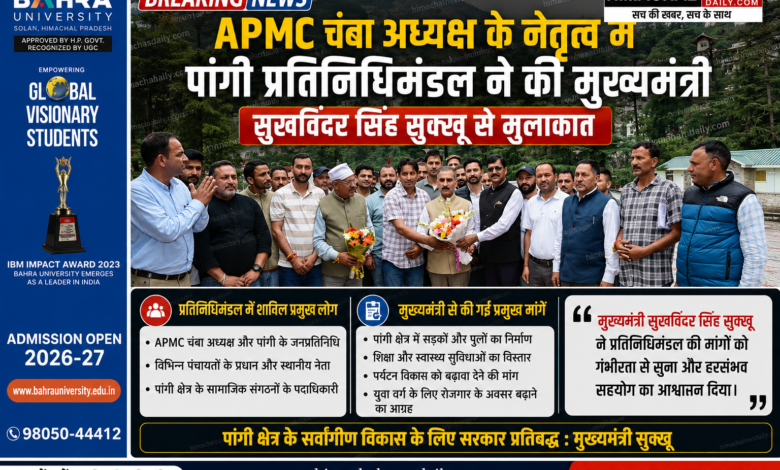
APMC Chamba Chairman Leads Pangi Delegation to Meet Chief Minister Sukhvinder Singh Sukhu
Delegation Apprises CM of Key Regional Demands; Chief Minister Assures Sympathetic Consideration and Government Support

VIDYA SAGAR-23/07/2026

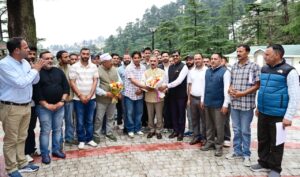
SHIMLA — A delegation representing the remote Pangi valley, led by Agricultural Produce Market Committee (APMC) Chamba Chairman Lalit Thakur, called on Chief Minister Thakur Sukhvinder Singh Sukhu in Shimla today to highlight key local issues and administrative demands of the region.
During the meeting, the delegation formally submitted a detailed memorandum outlining various development needs, infrastructure requirements, and civic priorities essential for the welfare and growth of the resident population in the landlocked Pangi region.

Key Highlights of the Meeting
-
Comprehensive Briefing: APMC Chairman Lalit Thakur briefed the Chief Minister on the specific geographical and seasonal challenges faced by the people of Pangi, emphasizing the need for targeted government intervention.
-
Focus on Development: The delegation submitted key demands covering regional connectivity, agricultural marketing infrastructure, healthcare accessibility, and public utility upgrades.
-
Positive Reassurance: Chief Minister Thakur Sukhvinder Singh Sukhu listened attentively to the concerns raised by the representatives and assured them that the state government would consider all genuine demands sympathetically and take prompt action wherever feasible.

Government’s Commitment to Remote Belts
Speaking on the occasion, the Chief Minister reiterated the state government’s firm commitment to ensuring balanced, inclusive development across all corners of Himachal Pradesh, with special focus on hard-to-reach tribal and remote regions like Pangi.
He assured the delegation that the welfare of people living in remote pockets remains a high priority and that necessary administrative steps would be initiated to address their grievances effectively.
Editorial Note: The interaction underscores the state government’s ongoing engagement with local community leaders from remote tribal belts to ensure equitable development and timely redressal of regional grievances.